 EN
EN DE
DEThe Technique: Three-Dimensional Paper Assemblages by Alexandra Zeillinger
“Layers of identity, layers of material.”
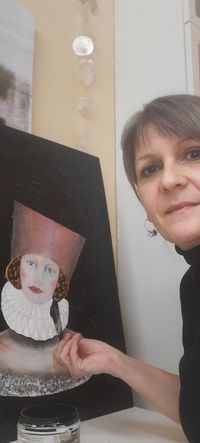
The hallmark of artist Alexandra Zeillinger is a three-dimensional assemblage technique
that she personally developed and optimized over years of practice.
Her works dissolve the boundaries between fine hand-drawing, sculptural craftsmanship, and physical object art.
that she personally developed and optimized over years of practice.
Her works dissolve the boundaries between fine hand-drawing, sculptural craftsmanship, and physical object art.
The Creative Process: From Draft to Sculptural Depth
Behind every piece lies a complex, purely analogue working process that carries the artist's distinct signature:
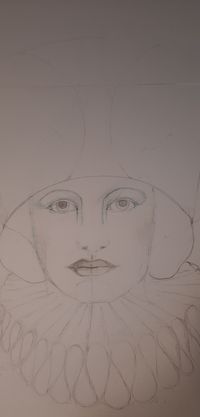
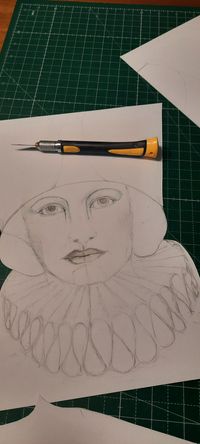
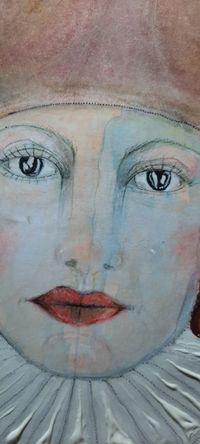
Drafting Precision: Each element begins as a detailed hand-drawing. Created with a delicate hand and high precision
using watercolor, pencil, or colored pencils, these drawings are then meticulously cut out by hand. Only a few, selected works deliberately remain in two dimensions as pure drawings.
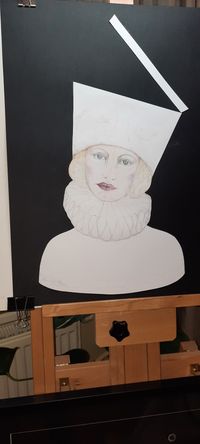
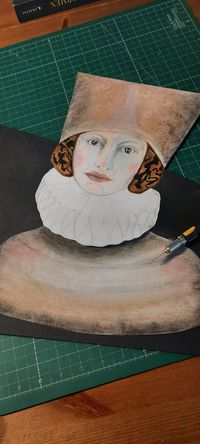
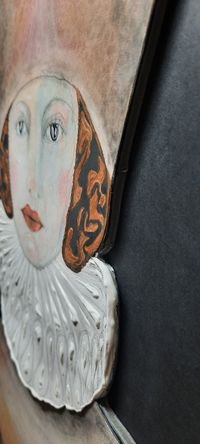
Sculptural Layering: Moving away from classic, flat paper art, Alexandra Zeillinger works with layered assemblages up to 10 mm thick. This deliberate building of solid, sculptural elements creates a fascinating depth, generating a living play of light and shadow.
The Characteristic Dark Space: A key design element is the generally dark background. This deep, mostly black space forms the atmospheric frame for the bright, highly detailed paper elements. The strong contrast of light and dark lends the motifs an almost archaeological presence and draws the viewer deep into the scene.
Drafting Precision: Each element begins as a detailed hand-drawing. Created with a delicate hand and high precision
using watercolor, pencil, or colored pencils, these drawings are then meticulously cut out by hand. Only a few, selected works deliberately remain in two dimensions as pure drawings.
Sculptural Layering: Moving away from classic, flat paper art, Alexandra Zeillinger works with layered assemblages up to 10 mm thick. This deliberate building of solid, sculptural elements creates a fascinating depth, generating a living play of light and shadow.
The Characteristic Dark Space: A key design element is the generally dark background. This deep, mostly black space forms the atmospheric frame for the bright, highly detailed paper elements. The strong contrast of light and dark lends the motifs an almost archaeological presence and draws the viewer deep into the scene.
The Frame as a Conceptual Space
In Alexandra Zeillinger's work, the presentation is never an afterthought, but an integral part of the artwork itself:
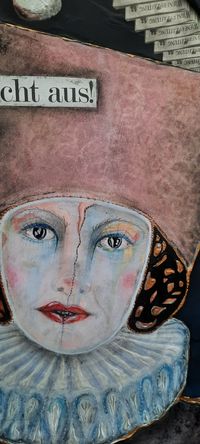
The “Zwischenräume” (Interspaces) Series in Shadow Boxes: For this special series, the artist presents her assemblages in glazed shadow boxes with wooden doors. To perfectly stage the enormous physical depth and three-dimensionality of her paper objects, she uses additional, custom-fitted wooden spacers when needed. Reflecting the concept of the series, the title of the work is written on paper, its edges artistically singed, and then mounted on the exterior wood of the shadow box door.
The Transformation of Antique Frames: In contrast to the modern shadow boxes, the artist seeks outantique frames.
Frames that show clear signs of time and wear are deliberately selected and artistically reworked
with acrylics.
This creates a tense dialogue between the historical patina of the frame and the delicate modernity
of the assemblage within.
Other Forms of Presentation: Some works, however, are also presented in classic object frames or on canvas in float frames.
The “Zwischenräume” (Interspaces) Series in Shadow Boxes: For this special series, the artist presents her assemblages in glazed shadow boxes with wooden doors. To perfectly stage the enormous physical depth and three-dimensionality of her paper objects, she uses additional, custom-fitted wooden spacers when needed. Reflecting the concept of the series, the title of the work is written on paper, its edges artistically singed, and then mounted on the exterior wood of the shadow box door.
The Transformation of Antique Frames: In contrast to the modern shadow boxes, the artist seeks outantique frames.
Frames that show clear signs of time and wear are deliberately selected and artistically reworked
with acrylics.
This creates a tense dialogue between the historical patina of the frame and the delicate modernity
of the assemblage within.
Other Forms of Presentation: Some works, however, are also presented in classic object frames or on canvas in float frames.
Content and Aesthetics in Dialogue
While three-dimensional paper art in contemporary design often remains purely decorative,
Alexandra Zeillinger uses her self-developed technique as a conceptual tool.
The fragility of the paper and the physical depth of the layers reflect the existential themes that move her:
the vulnerability of our environment, the multifaceted layers of human identity, socio-political issues,
and the traces of structural violence.
Alexandra Zeillinger uses her self-developed technique as a conceptual tool.
The fragility of the paper and the physical depth of the layers reflect the existential themes that move her:
the vulnerability of our environment, the multifaceted layers of human identity, socio-political issues,
and the traces of structural violence.
An art that does not merely thematize depth, but makes it physically tangible.
20240125_185638
20240125_185852
20240126_102936
20240127_172003
20240130_180352
20240130_180400
20240131_191718
20240204_142020